The Question Most Students Aren’t Prepared to Answer
Ask most students, “What do you want to do with your life?” and watch what happens. You’ll see:
- The deer-in-headlights look.
- The shrug.
- The “I don’t know.”
These responses aren’t because of laziness or a lack of motivation. And this happens with the straight-A kid and with the one who’s struggling in school.
So many students feel stuck because we’re asking them to make important decisions about their future before they understand themselves well enough to decide.
And these decisions can feel especially difficult today.
- College is a major financial commitment, especially when a student is unsure of their purpose or what they’re truly “good at.”
- A degree alone doesn’t guarantee a clear path into a good job like it used to.
- AI is adding another layer of uncertainty about what work will look like and the availability of future jobs.
Your student doesn’t need to have the next 40 years figured out. But they deserve more than a guess when choosing their next step.
One Important Piece Most Students Are Missing
For years, we’ve handed students a simple success formula: pick a college, choose a major, graduate, get a job.
But that formula leaves out something that should help guide those choices in the first place:
Their Wiring: The pattern of natural abilities that explains the kinds of tasks and problems they’re well suited to handle.
I want you to picture Shaquille O’Neal trying to make it as a horse jockey. It’s funny because the mismatch is obvious.

With students, a mismatch can be much harder to see. They may have real ability but few opportunities to recognize or use it in their daily lives.
I once worked with a 19-year-old who believed her entire high school experience had been a failure. As we explored her abilities, a different picture emerged: she had strengths suited to hands-on, tangible, visual work.
Unfortunately, she hadn’t experienced much of that in school. What she saw as failure started to look more like a mismatch.
Why I Care About Helping Students Find Their Fit

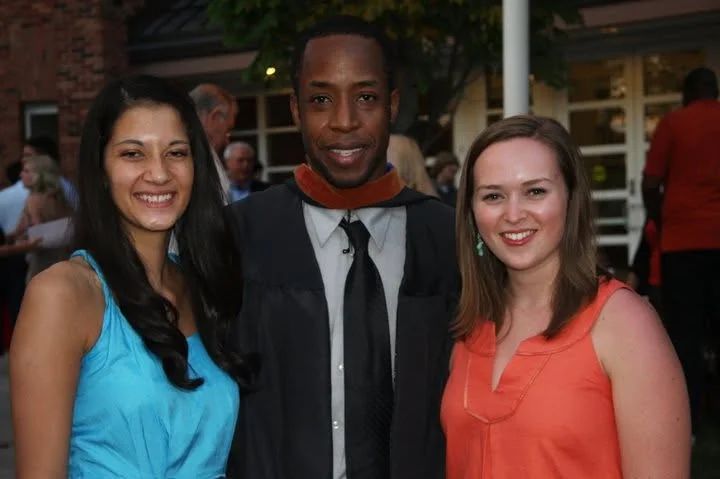
Hi, I’m Richard Harris. I was the Director of College Advising at Minnehaha Academy, and later shifted to the corporate world, where I led the college recruiting teams at two multi-billion-dollar companies, U.S. Bank and Mortenson, hiring thousands of students into internships and their first jobs.
My LinkedIn profile can be found here.
I’ve worked with students as they decide what comes after high school, and I’ve been on the hiring side when they’re ready to put that education to work.
That combination of experiences shapes how I help families think about college, majors, and careers.
There’s also a more personal reason preparation matters so much to me.
If you lived in the Twin Cities in 2017, you may remember the gas explosion at Minnehaha Academy.
My mom was, and still is, the school’s president. She survived. Unfortunately, two people I knew very well did not.
As we canvassed the scene on the night of the explosion, I remember asking a responding officer how he and his team managed to do their job so well in the middle of something so awful.
He said, “It’s because we were prepared before this day even arrived.”
The stakes are obviously different when comparing an immense tragedy to your student’s future. But those words from the officer have stayed with me.
When I meet a student who’s approaching graduation with no idea where they’re headed, I wish they’d received real direction before the applications were due, a major needed to be chosen, or tuition needed to be paid.
I want to give your student the opportunity to understand themselves, explore possibilities, and feel more prepared when important decisions arrive.
When thinking about the future, most families believe a career assessment seems like a good place to start. But they’re not all created equally.
Why Career Quizzes Can Leave Students Still Guessing
Many career assessments ask students questions about their interests, preferences, or how they see themselves.
They might ask a student to choose between things like:
“Would you rather be a wildlife expert or a public relations professional?”
Or, “Would you rather be a company controller or a TV news anchor?”
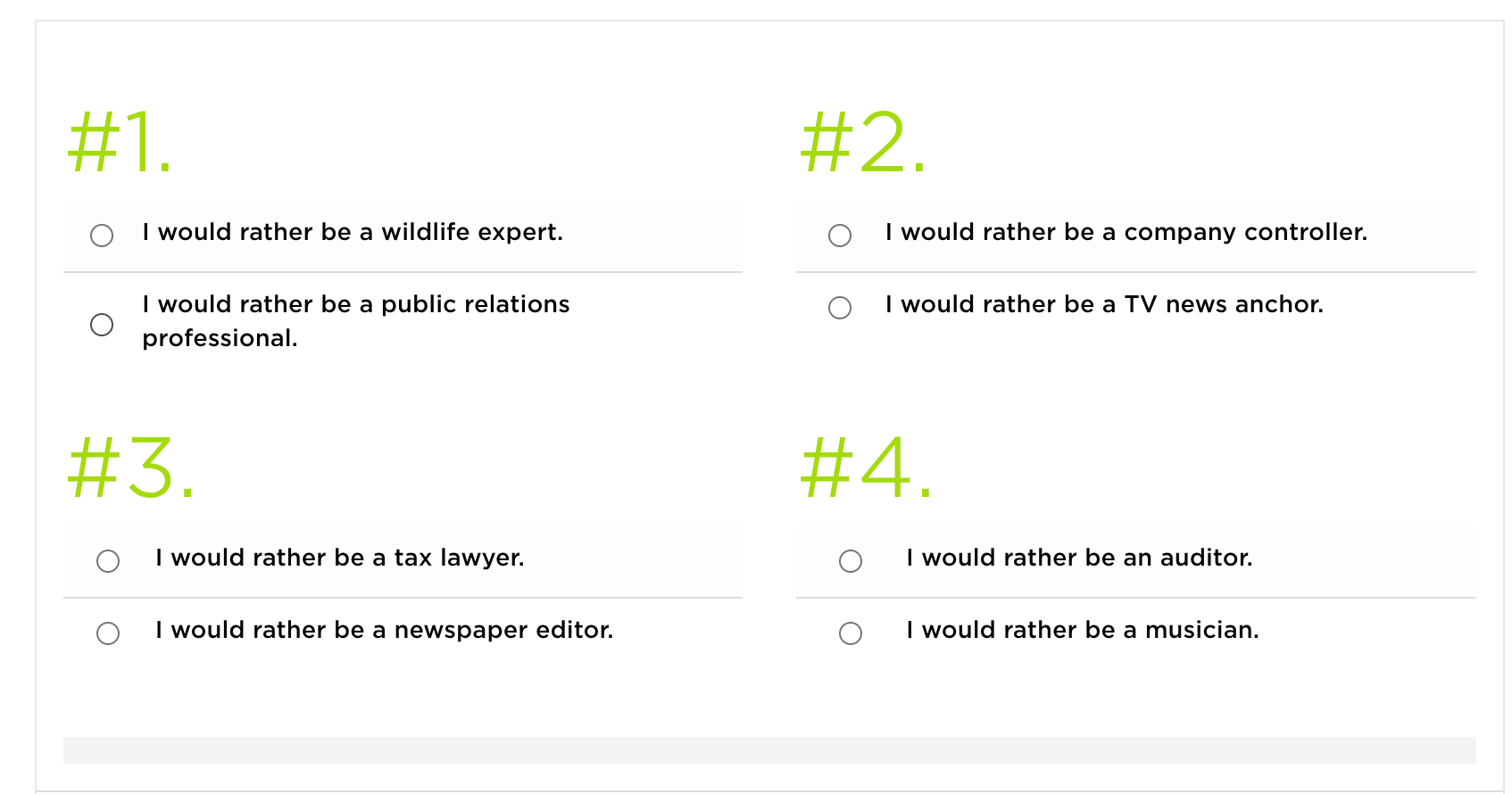
If your student has never seen these jobs up close, or doesn’t know what a company controller does, those questions can be difficult to answer meaningfully.
Interest assessments can be useful. But liking the idea of a job and understanding the abilities needed to be successful are two different things.
A student who says, “I don’t know what I’m good at,” needs a way to discover strengths they may not yet recognize.
So the question becomes:
What if your student could measure their abilities without relying only on how well they can describe themselves?
That’s What Makes the Highlands Ability Battery Different
The Highlands Ability Battery has been used since 1992. Instead of relying only on self-assessment questions, it has them complete online worksamples that measure how they perform different kinds of tasks.
After all, we feel most engaged in our careers when our day-to-day tasks match our innate abilities.
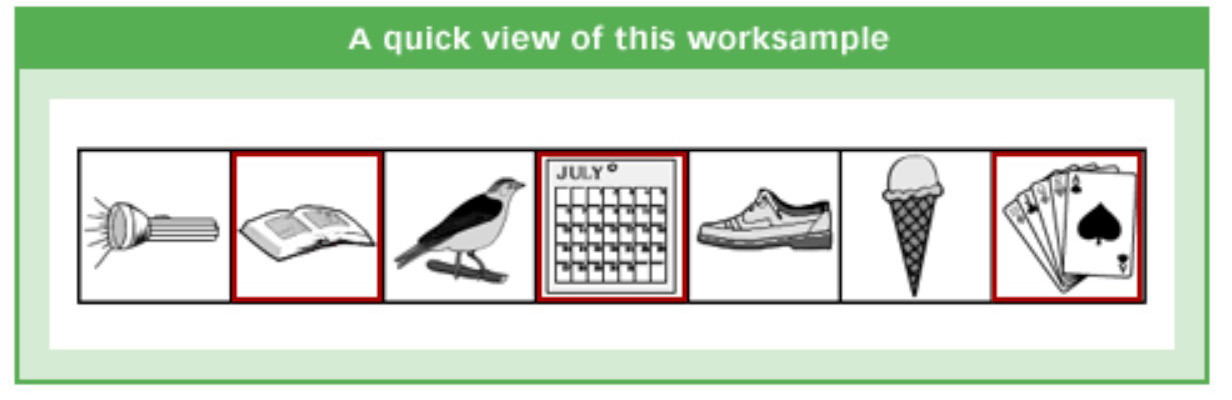
Within Highlands, one task asks them to spot which images share an underlying pattern.
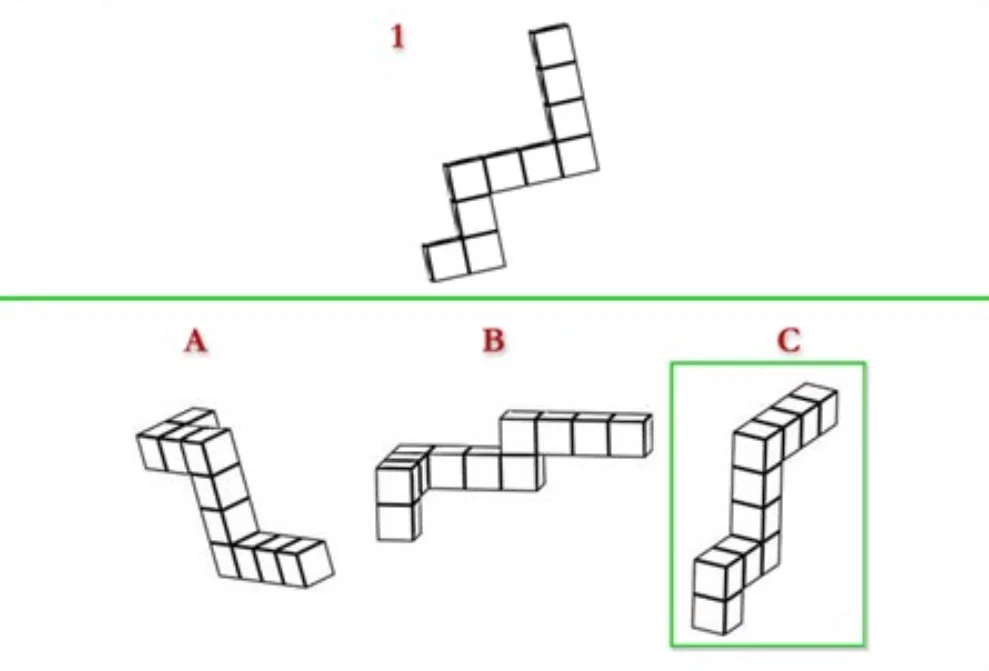
Another asks them to mentally rotate a 3D shape and predict what it looks like from a different angle.
There are 17 other worksamples that students complete within this assessment, but why does this matter and how does this information help students?
Behind every college major or career are different kinds of tasks.
- Some tasks involve hands-on, tangible objects.
- Some involve ideas, patterns, and relationships.
- Some call for a steady flow of new ideas.
- Some require sustained focus on a specific problem.
The worksamples help reveal your student’s pattern of abilities, giving them something more concrete to work with than “I think I might like that.”
From “I Don’t Know” to Possibilities Worth Exploring
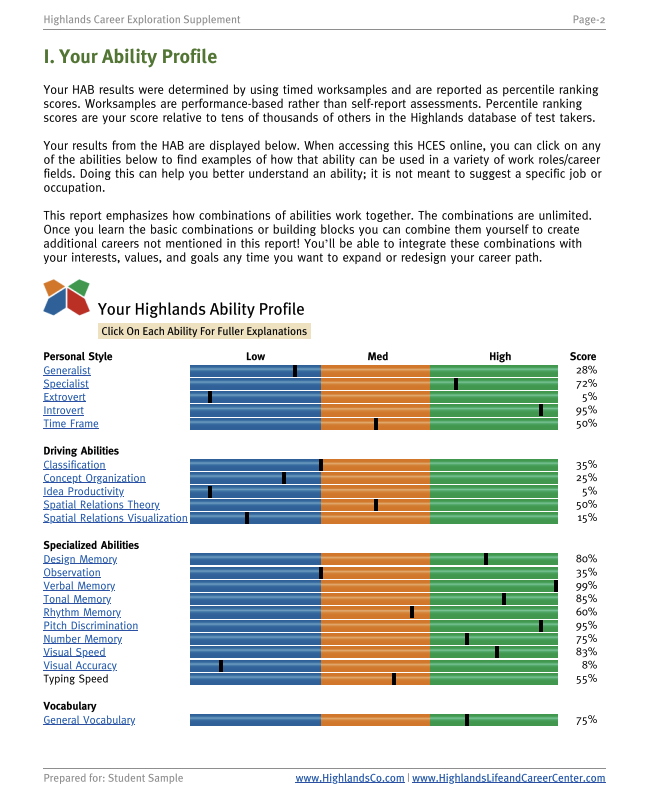
The full report runs about 35 pages and covers personal style, driving abilities, and specialized abilities, including information about how your student learns and remembers.
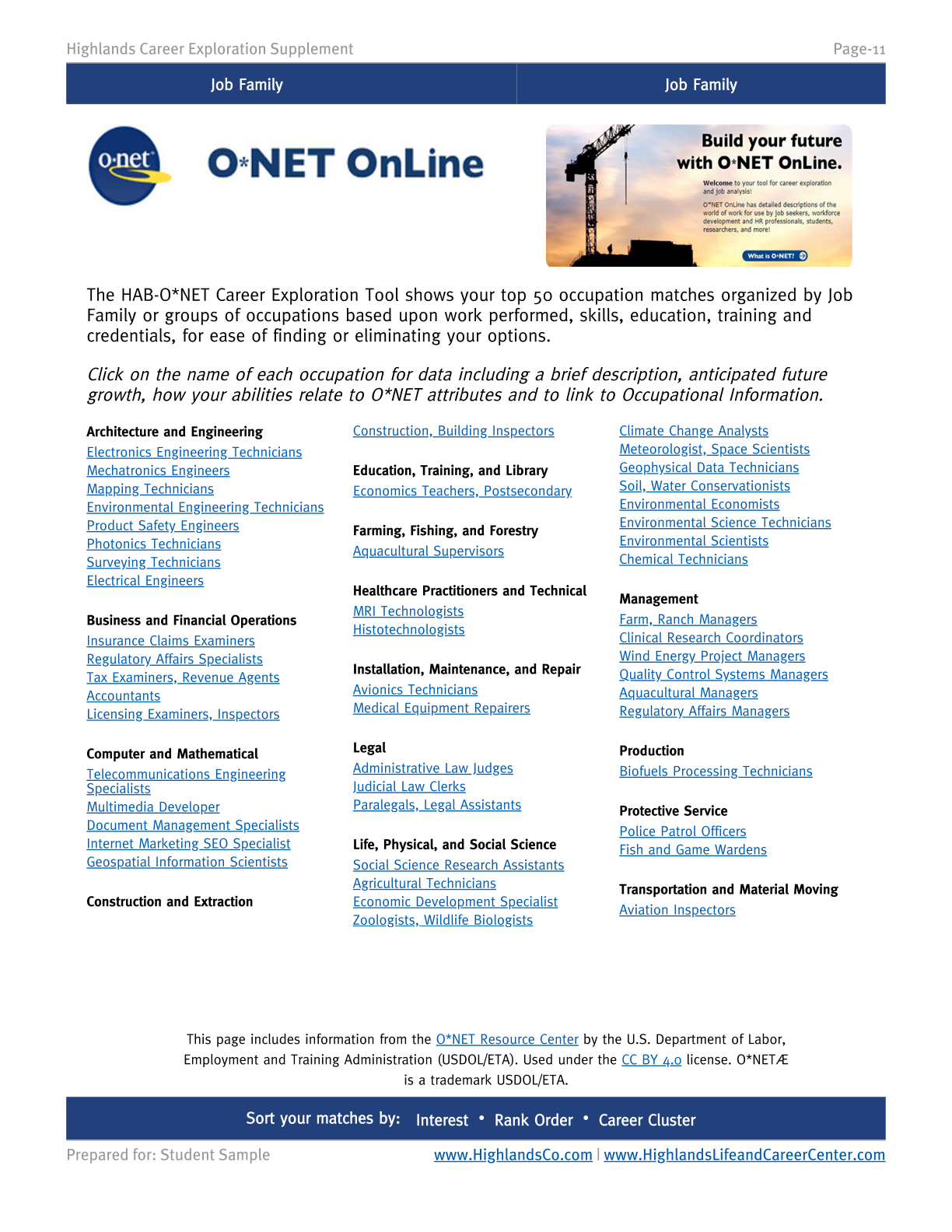
It also connects ability patterns with occupational information from O*NET, a U.S. Department of Labor resource, so your student can explore job categories with a clearer understanding of why they might be worth considering.
But you won’t be left to make sense of a lengthy report on your own.
We’ll meet one-on-one on Zoom, and I’ll help you and your student connect the results to the decisions in front of them.
We’ll talk about questions like:
- What strengths stand out, including ones your student may have overlooked?
- What kinds of work and environments could make good use of those strengths?
- Which career areas or fields of study deserve a closer look?
- What should your student explore next before committing to a direction?
I worked with a mom named Ana and her daughter Charlotte. Charlotte had spent years intensely focused on one narrow interest and checked out on almost everything else in school.
When the report showed she was a high specialist, Ana’s reaction was immediate: “That’s exactly why she’s wired this way.”
Years of behavior suddenly made more sense, and they finally had language for it.
That kind of understanding can give a family a more useful starting point for conversations about the future.
No assessment can tell your student what to do for the next 40 years. Their interests, values, experiences, and goals matter too.
But understanding their abilities can help them identify promising directions, and explain why those possibilities deserve their attention.
Here’s What I’m Offering, and Why It’s Free
For a limited number of families, I’m covering the cost of the complete Highlands experience. That includes:
- The complete Highlands Ability Battery.
- The full 35+ page written report.
- A one-on-one Zoom session with me, walking through the results and what they mean for your student’s next step.
The complete experience normally costs around $450. Your cost is $0.
One parent asked me point-blank before signing her son up, “Richard, I read through your page, and know that was just a marketing ploy, but how much does this really cost?”
It took a minute to convince her the answer was really $0.
I offer this because I’ve spent years watching capable students struggle without a clear understanding of their strengths, and I want more families to have access to that information.
I also offer paid support for families who want help exploring options and turning those insights into a plan after receiving their Highlands insights. If that interests you after seeing the results, we can talk about it separately.
There’s no obligation to continue with me after receiving your student’s assessment results. The assessment, the report, and our feedback session are yours at no cost.
Is This Right for Your Student?
This experience is for high school juniors, seniors, and college-aged students who want more direction and are open to learning something new about themselves.
It may be especially helpful if your student:
- Actually wants direction for their future but isn’t sure where to start.
- Says, “I don’t know what I’m good at.”
- Has several interests but struggles to narrow them down.
- Is considering a field of study without a clear reason for choosing it.
- Wants a clearer starting point for exploring life after graduation.
Your student doesn’t need to arrive with a plan. They do need to be willing to participate and explore what they learn.
Here’s How to Get Started
- Fill out a short questionnaire so I can understand your student’s situation.
- We hop on a brief call, five to ten minutes, to make sure this is the right fit right now.
- Your student takes Highlands online using the access code I provide.
- We meet on Zoom to go through the report together and discuss what it means for their next decision.
The assessment, the report, and the session. All at no cost, while spots remain available.
Your student doesn’t need to figure out their entire future today.
But they can begin to understand strengths they haven’t known how to name, see possibilities they hadn’t considered, and have a clearer reason for the next step they take.